Situated in Campo de Calatrava, landscape dominated by many hills, Ciudad Real offers a modern layout that has been able to maintain all the flavour of La Mancha. Better communicated thanks to the Madrid-Seville high speed train, this city offers us exceptional cuisine centred on game, cheese and wine. In addition, the Cabañeros and Las Tablas de Daimiel natural parks tell us of its rich ecosystems.
During the Middle Ages, four kilometres of walls and one hundred and thirty towers protected a population made up of Christians, Moors and Jews. After the unification of the peninsular kingdoms under the Catholic Monarchs, Ciudad Real became the capital of the province of La Mancha in the 17th century. This fact favoured its economic development which was poured into important buildings.
A good example of La Mancha Mudejar architecture (14th C.) is the Puerta de Toledo, one of the eight gates which opened in the city’s walled area. Its pointed horseshoe arches are flanked by two square towers.
Let’s get started!
Alfonso X (the Wise)and churches The unusual Gothic style in this city is shown in an artistic site planned by the founder of this city, Alfonso X (the Wise), and formed by three churches. Among them, the church of Santiago, the oldest of those preserved, is outstanding. Its origin is Gothic, but it was later enriched with a Mudejar roof and Baroque arches. Its mural paintings, one of which represents a seven-headed apocalyptic dragon, deserve attention. The Cathedral of Santa María del Prod is another good example of the combination of styles, the consequence of a long construction process. Its earliest elements correspond to the 13th century, while the latest date from the 19th century Inside, the Baroque reredos and choir stalls are outstanding.The third of these churches is that of San Pedro, a Gothic church from the end of the 14th century whose profile seems like a fortress. Its three doorways have decoration formed by archivolts, rosettes and decorated capitals. The architecture of this period uses Christian and Muslim elements indiscriminately, alternating Gothic pointed arches with Mudejar horseshoe ones, leading to a very unusual fusion of styles.
The area around the Plaza Mayor is a good area for tasting the wine with the La Mancha and Valdepeñas denominations of origin, which is good accompanied by some portions of the cheese from the region. Near the square we can get to know the typical elements of a large aristocratic La Mancha house. The Casa de Hernán López del Pulgar shows us, inside, a courtyard with columns and a Renaissance staircase. The rest of modern Ciudad Real dates from the 19th century and beginning of the 20th, in which the Medrano Palace – the University Rectorate – the former Casino – now headquarters of the Musical Conservatory – and the Palace of the Provincial Government are outstanding. Meanwhile, the range of museums in Ciudad Real is centred on the Provincial Museum’s archaeological treasures – the entrance door of the old synagogue is preserved here – and the Diocesan Museum.
“Don Quijote de la Mancha” From Ciudad Real, we have many possibilities for getting to know this province, immortalised in Cervantes’ work “Don Quijote de La Mancha”. In the county of Campo de Calatrava is Almagro, well known for its Open Air Theatre (National Monument) and its International Classical Theatre Festival. As well as other interesting buildings, its National Theatre Museum and Parador de Turismo are worth a visit. This 16th century former convent brings us a little closer to La Mancha’s history and art, as well as its cuisine. It is a wonderful place for doing justice to a cuisine with rural and pastoral origins. La Mancha cheeses and Almagro aubergines, both with their own Denomination of Origin, serve as an aperitif for game dishes like rabbit with garlic, hare with rice, stewed partridge and so on. «Gachas» (made with flour), «migas» (breadcrumbs accompanied by pork products) and «tiznao» (cod with peppers, onions and garlic) are some suggestions. And, for dessert, «pestiños» (sweetened mixture of fried flour) or «mostillo» (sweet made from grape must), among many other recipes. Campo de Calatrava also offers us castles, palaces and places of great historical-artistic importance like El Viso del Marqués, Almuradiel or Calzada de Calatrava. Meanwhile, in the county of Campo de Montiel, you will discover the medieval remains of Montiel, the Lagunas de Ruidera Natural Park and places like Villanueva de los Infantes and Villamanrique. This province’s rich natural landscape is made clear in two national parks: Cabañeros and Las Tablas de Daimiel. Mediterranean woodland accompanies by meadows and wetland on the La Mancha plain form the main features of these protected areas.
Ciudad Real is my home and the best place to live (for me)
“Haciendo las Américas con una Marie Curie”, organized by ECUSA (Españoles Científicos en USA), Fundación Ramón Areces, Marie Curie Alumni. United States, July 3, 2020.
«Experience with European projects: Marie Skolodowska-Curie Actions (MSCA), School of Health Sciences of the Centro Superior de Estudios Universitarios La Salle and Institute of Neurosciences and Movement Sciences (INCIMOV) of the Centro Superior de Estudios Universitarios La Salle, Madrid, May 7, 2021.
Courses and seminars received related to marketing research
How to lead (not just survive) Digital transformation. Center of Professional Development, Stanford University (Webinar). Date: August 1, 2019.
How your organization can use AI to increase subscriber engagement right now webcast. American Marketing Association (Webinar). Date: 8 August, 2019.
On 24. How to use webinars to drive the buying cycle. American Marketing Association (Webinar). Date: August 20, 2019.
How to know your customer in a data secure world? American Marketing Association (Webinar). Date: August 22, 2019.
Leveraging power of analytics for retention marketing. American Marketing Association (Webinar). Date: August 28, 2019.
Webinar MCAA North America Mobile researchers and the challenge of the network_How to maintain professional connections over time and space (Webinar). Date: September 11, 2019.
Tech, Tools, and Team Design: How you can utilize new platforms to work smarter. (Webinar). Stanford University. Date: October 22, 2019.
Meta-analysis workshop. Society for Marketing Advances, New Orleans (United States). Date: November 5, 2019.
IV Workshop (online). Sección Marketing ACEDE Asociación Insights Analytics Nuevas orientaciones en la investigación de marketing digital. Asocaición Científica de Economía y Dirección de la Empresa (ACEDE). Date: January 25, 27, 2021.
PLS-SEM: Fundamentals and Advanced Developments (I Edition). Continuing Education Center of the University of Seville. This course consists of 4 ECTS credits, with a duration of 20 hours. Date: February 15, 17, 19 and 22, 2021.
Ask Us Anything” with Innovation All-Stars Bob Sutton and Hayagreeva Rao. (Webinar). Stanford University. Date: Febrero 23, 2021.
Introducción a los Modelos de Ecuaciones Structurales (CBSEM). Duration: 24 hours. University of Valencia. Date: March 5, 12, 26 and April 16, 23, 30
Courses and seminars received related to teaching
Teaching social media marketing workshop. Society for Marketing Advances, New Orleans (United States). Date: November 5, 2019.
Video Marketing SIG: Prepare for your next project. American Marketing Association. Held at University of California San Diego. Date: January 22, 2020.
Courses and seminars received related to further training
How to lead (not just survive) Digital transformation. Center of Professional Development, Stanford University (Webinar). Date: August 1, 2019.
How your organization can use AI to increase subscriber engagement right now webcast. American Marketing Association (Webinar). Date: August 8, 2019.
On 24. How to use webinars to drive the buying cycle. American Marketing Association (Webinar). Date: August 20, 2019.
How to know your customer in a data secure world. American Marketing Association (Webinar). Date: August 22, 2019.
Leveraging power of analytics for retention marketing. American Marketing Association (Webinar). Date: August 28, 2019.
Mobile researchers and the challenge of the network. How to maintain professional connections over time and space (Webinar). North America Marie Curie Alumni Association. Date: September 11, 2019.
Don’t let consumer privacy regulations impact your marketing ROI. American Marketing Association (Webinar). Date: October 17, 2019.
Tech, tools, and team design: How you can utilize new platforms to work smarter (Webinar). Stanford University. Date: October 22, 2019.
Training workshop for the Certification in Hotel Industry Analytics (CHIA). Smith Travel Research Corporation. Held at Rosen College of Hospitality Management in Orlando (United States). Date: December 14, 2019.
Retention is the new growth: Learn demonstrated techniques that drive retention (Webinar). American Marketing Association. Date: January 22, 2020.
Think like a designer to design your career (Webinar). Stanford University. Date: January 23, 2020.
AMA virtual Conference: The Year Ahead in Marketing (online). American Marketing Association. Date: January 28-29, 2020.
Reimagining your work-life balance (Webinar). Stanford University. Date: February 18, 2020.
BIMI: The new standard to boost your brand & email deliverability. American Marketing Association (Webinar). Date: February 21, 2020.
Intelligent tools for the digital age (online). IE Business School. Date: March 23-April 19, 2020.
AMA Virtual Conference. Experience Design. American Marketing Association. Date: April 21-22, 2020.
The 5 ways to build trust and empower users with preference management. American Marketing Association (Webinar). Date: April 23, 2020.
¿Y ahora qué? Marketing digital, coronavirus y la “nueva realidad”. ESIC Business & Marketing School. Date: May 27, 2020.
Blockchain y los nuevos modelos de identidad digital. ESIC Business & Marketing School. Date: May 28, 2020.
“Gestión de la propiedad intelectual: Transferencia tecnológica y licencias. Know-how, información confidencial y secreto industrial” . University of Castilla-La Mancha. Date: January 28, 2021.
“Beyond the Freeze: Trans-Atlantic job opportunities» (Webinar). Marie Curie Alumni Association. Date: March 9, 2021.
“Upskilling: From Marie Curie to ERC». MarieCurie Alumni Association. Date: March 11, 2021.
Courses and seminars received related to science diplomacy
S4D4C European Science Diplomacy online course. S4D4C Project, European Commission. Date: July, 2020.
Science Diplomacy: An introduction. AAAS Center for Science Diplomacy. Date: July, 2020.
EuroScience Open Forum- ESOF 2020. Trieste (Italy). Date: September 2-6, 2020 (Conference).
Full Academic Member of the Young Academy of Spain
1st place best paper award. Almeida, S., Campos, A., Díaz, E., & Pinto, P. (2021). Boosting smart destinations through adoption of new technologies: An Iberian perspective. In Proceedings 6th World Research Summit for Hospitality and Tourism 2021. Orlando (United States): UCF Rosen College of Hospitality Management.
Member of the Academic Committee 2021. I International workshop on Current Trends in Customer Experience in the Retail and Services Industries (CTCEX 2021), held in Zaragoza, Spain, October 7-8, 2021.
Member of the Scientific Committee 2021. International Conference on Advanced Research in Technologies, Information, Innovation and Sustainability (ARTIIS 2021), held in Salinas, Ecuador, November 25-27, 2021.
Díaz, E. (2021).Service cannibalisation in tourism-Contributions by Estrella Díaz Sánchez, in Correia, A. and Dolnicar, S. (Eds.) (2021) Women’s voices in tourism research – Contributions to knowledge and letters to the next generation. The University of Queensland.
Díaz, E. & Carranza, R. (2022). Service cannibalisation, in Buhalis, D., (ed) Encyclopedia of Tourism Management and Marketing, Cheltenham, UK and Northampton, MA, USA: Edward Elgar Publishing.
“Access Youth Academy” at University of California San Diego (UCSD), San Diego (United States). Date: January 2020- July 2021. https://ucsdnews.ucsd.edu/pressrelease/the-preuss-school-uc-san-diego-named-countys-1-high-school
House of Spain
Member of the Board of Directors of «House of Spain», San Diego (United States). Date: February 2020-Present.
Serving seniors
Volunteer at «Serving seniors», San Diego (United States). Date: July 2019-July 2021.
Brussels is the capital of Belgium, but it is also the administrative seat of the European Union. Brussels is in the heart of Europe and also of Belgium, between the provinces of Flanders and Wallonia. It is a bilingual city in French and Dutch. As a curiosity, it is worth mentioning that it belonged to Spain between 1477 and 1713.
Brussels has history, culture and numerous attractions to visit in the city. Brussels is a city of about 175,000 inhabitants, so you can walk to most tourist sites. Here are some of its main attractions.
Let’s get started!
The Grand Place
The famous Grand Place is the heart of the city and one of the most beautiful squares in the world! This square is considered a World Heritage Site since 1998. The Grand Place. It is an icon, the geographical, commercial and historical center of Brussels. There are incredible buildings that today house from institutions to cafes, and of course stores where you can buy souvenirs and typical products such as chocolate and traditional lace and embroidery of Flanders. In this square are concentrated daily and at all times of the year flower stalls, locals who pass in a hurry and, of course, travelers contemplating the beautiful buildings that surround it. You’ll see how wonderful! Although everything from battles to executions have taken place in the Grand Place, today something much more joyful is celebrated there. In August of even-numbered years, the Flower Carpet is held. At this time, the square is covered with beautiful flowers that form colorful images on a particular theme. It is advisable to visit it both during the day and at night, you will see how beautifully it is illuminated! Don’t miss it at Christmas time either. Light and sound shows are held there that are a real blast. The most important buildings to see in the Grand Place are:
Brussels City Hall Of all the buildings that make up the square, the town hall is the oldest. Inaugurated in the early 15th century (although renovated in the late 18th century after the Palatinate War), the impressive town hall is the star of the square. It survived a French attack in 1695 and the rest of the buildings had to be rebuilt. But it did not take long to restore its prestige. In 5 years the architectural ensemble was completed. For its part, the town hall was built in 1459 in two phases, directed by two different architects, so it is not symmetrical. Its intricate facade is a fine example of Brabantine Gothic architecture. Its tower, more than 90 meters high, is crowned by a bronze statue of St. Michael the Archangel (patron saint of the city) that serves as a weather vane.
King’s House Just opposite the town hall is a neo-Gothic building with an incredible facade called Maison du Roi or The King’s House. The king referred to is Charles I of Spain and V of Germany. This building was built in 1536 and was, for many years, the residence of the monarchs. Today, this building houses the Museum of the City of Brussels where objects on the history of the capital are exhibited, as well as the different outfits of the Manneken Pis. Undoubtedly, one of the most curious places to see in Brussels!
House of the King of Spain The number 1 of the Grand Place (on one of the corners of the square) corresponds to this baroque building. Its facade is dominated by the sculpture of a triumphant Charles II, the bust of the patron saint of bakers (guild to which he belonged) and its small lantern tower in shades of green.
Houses of the Guilds The buildings to the right of the town hall are guild buildings, that is, they belonged to a guild of workers. You can distinguish each of the guilds by looking at the decoration of the facade.
In addition to the bakers’ guild, on the Grand Place there are more houses of different guilds, especially on the side next to the King’s House. In one of them, even Victor Hugo lived for a while.
Royal Saint-Hubert Galleries The Galeries Saint-Hubert were the first shopping arcades in Europe. They were built in 1847 and are covered by a beautiful glass dome, perfect to let the light through but not the rain. And what do we find in these galleries? Well, all kinds of stores, jewelry stores, a small theater and a cinema, exclusive chocolate shops and stylish and glamorous cafes. The galleries are about 200 meters long and connect the historical part of Brussels with a more modern area. There are three entrances to the galleries: Rue du Marché aux Herbes, Rue des Bouchers or Rue de l’Ecuyer.
The Manneken Pis and its collection of costumes Although its real origin is unknown and a lot of legends surround it, the Manneken Pis is an icon in Brussels and is the most social citizen of the city because it is always surrounded by people. This statue of 50 centimeters was created in 1388 and represents what you see in the picture, a boy urinating in a fountain. The original was stolen and the one that exists today is a replica that was placed in the same place in 1619. In 1698, a governor gave the statue a piece of clothing. It has become a tradition to the point that it has more than 1,000 costumes and there is a person who is dedicated solely to change the Manneken Pis dress. If it is the national day of a country, for example, he is dressed in the traditional costume of that country.
Janneke Pis and Zinneke Pis And since there is the ‘peeing boy’, they had to create the girl and the dog as well. The girl was created in 1987 at the request of a restaurant owner. We see her squatting and peeing behind some bars. She is right in front of the entrance of the Delirium Tremens, the most famous brewery in Brussels. The Zinneke Pis follows the same line, but it is a dog lifting its paw to urinate in the street.
Delirium Tremens Café The Delirium Tremens Café is known for having more than 2,000 different brands of beer. Today it is also possible to find this brewery in other parts of the world such as Tokyo, Lisbon or Kuala Lumpur, as they have expanded the business.
Mont des Arts The Mont des Arts or Mont des Arts is so named because around it are the most important museums of the city, such as the Magritte Museum or the Museum of Musical Instruments, which occupies part of the Old England building. In addition to being a meeting point for art lovers, the Mount has incredible views of the old town of Brussels. Strolling here, especially at sunset, is one of the best things to do in Brussels. The Mont des Arts is also home to the Royal Library of Belgium. On the top floor there is a cafe with good prices and excellent views of the city.
Museum of instruments – Old England In the Old England building is the museum of musical instruments. It is a museum dedicated to instruments of all kinds, from all countries and from all eras and the truth is that it is very interesting to see.
The Royal Palace and the Park of Brussels The palace is the workplace of the Belgian King, but not his residence. It was built in the early nineteenth century and, as usual in such buildings, has undergone renovations and extensions. The Royal Palace opens its doors during the summer, approximately from July 21, which is the day of the country, until early September, coinciding with the return of the monarch to work. At that time you can take guided tours inside the palace. Just in front is the Brussels Park, which would be like the Central Park of the city, although it is obviously not as big. During medieval times, this space was used as a hunting ground. Today it is a green area with fountains, sculptures and walks where it is common to see people running, having picnics with friends or taking a walk with the family.
Cincuentenario Park The Cincuentenario Park is another public park located in the European neighborhood. In addition to the park there are a number of buildings that were built for the National Exposition of 1880. One of the most outstanding buildings is the triumphal arch, which was built in 1905.
European Parliament The European Parliament is located in Brussels and can be visited individually or guided tours to see some areas open to the public.
Visit theAtomium, one of the best things to do in Brussels. Another of the things to do in Brussels is to visit the Atomium, a structure that represents an iron crystal magnified 165,000,000 times. It is 102 meters high and the structure is composed of 9 steel spheres of 18 meters in diameter each. So do not be surprised if, when you see it for the first time, you really hallucinate with its size. Just as the Manneken Pis is surprisingly small, the opposite is true for the Atomium. The Atomium was built in Heizel Park in 1958 and has become a symbol of the city. Of the 9 spheres, only 6 are open to the public. The other three are closed for security reasons. Each sphere is reserved for a specific activity and are connected to each other by tunnels and escalators. Inside the spheres you will find permanent and traveling exhibitions and a restaurant with an observation deck.
St. Michael and St. Gudula Cathedral The Cathedral of St. Michael and St. Gudula is one of the most important and emblematic buildings in Brussels. Construction began in the thirteenth century on an earlier building of the eleventh century. It was originally known as the church of St. Michael, but in 1047 they deposited inside the remains of St. Gudula and there adopted the name of both.
Sablon Quarter and the Place du Petit Sablon One of the lesser known things to do in Brussels is to stroll through the Sablon district. It is an architecturally beautiful area, full of bars and restaurants and with an antique market every weekend. The Place du Petit Sablon is one of the must-see places in this neighborhood. Belgium had achieved independence a few years ago and decided to create a public space that reflected Belgian nationalism and pride in the country. Thus, this square was created, which has 48 bronze statues representing the old medieval guilds. Probably, what stands out most is the monument dedicated to the Counts of Egmont and Homes, who were executed in the Grand Place for leading a revolt against Spain in the sixteenth century and became a symbol of Flemish resistance. From this square you also have an excellent view of the Church of Our Lady of Sablon.
Viewpoint of the Palace of Justice The Palace of Justice in Brussels is larger than St. Peter’s Basilica in Vatican City. Its total surface area is 26 000m². Next to the palace there is a viewpoint from which you can see the whole city.
Visit Bruges and Ghent And if you have time, Antwerp, Leuven, etc.. Belgium is much more than Brussels, the good thing is that it is a country perfectly connected by public transport and you can visit neighboring cities quickly.
Overall, Brussels is a beautiful city to discover.
European Travel Commission
ETC activities are implemented by the Executive Unit based in Brussels under the guidance of the Board of Directors, and with the support of a number of expert groups: the Market Intelligence Group, the Marketing Group and the Overseas Chapters.
Established in 1948, the European Travel Commission is a unique association in the travel sector, representing the National Tourism Organizations of the countries of Europe. Its mission is to strengthen the sustainable development of Europe as a tourist destination.
In the last several decades, ETC has positioned itself at the forefront of the European tourism scene, establishing its expertise and building up partnerships in areas of tourism, based on promotion, market intelligence and best practice sharing.
ETC currently focuses its activities in the following areas:
Research
The European Travel Commission considers research a critical tool to develop marketing strategies and services. ETC research activities are meant to deliver its members the intelligence support necessary to keep a competitive edge in the global tourism market. By identifying and analysing tourism market trends and producing knowledge on relevant and fastest growing outbound markets, ETC research activities help the organisation and its members understand the business environment, detect new growth opportunities and formulate suitable promotional strategies. ETC adopts a holistic approach to research, which is reflected in its large portfolio of publications, which includes easily accessible visual content, and in the research partnerships that ETC is committed to grow and which at present include:
The ETC research programme is devised and implemented by the ETC Research & Development department of the Executive Unit and research expert groups (the Market Intelligence Group and the Market Intelligence Committee) following the principles of The Malta Declaration on the Role of Market Intelligence in the development of European tourism adopted by ETC members at their General Meeting and 2nd Executive Summit & Symposium on Market Intelligence, held in Malta on 3/4 October 2006.
Marketing
The European Travel Commission is responsible for the promotion of Europe as the worldwide number one tourist destination in key third visitor markets. The European Travel Commission carries out its marketing activities with the following objectives:
Establishing ETC as the leading organisation responsible for marketing Europe as a whole to overseas markets
Increasing Europe’s market share of global tourism
Providing an attractive and useful range of services to its members that enhances their individual and collective competitiveness
Raising the profile of ETC within the tourism industry in Europe
In order to optimize Europe’s market positioning, ETC has developed the “Destination Europe” brand as part of its marketing strategy. By defining the continent’s unique selling points and brand identity, the “Destination Europe” brand is intended to create an effective umbrella for all ETC members to unite, benefit from economies of scale and build trust among tourists and the travel trade, whilst still conveying their countries’ distinctive and individual characteristics.
The ETC marketing programme is formulated by the Marketing Group (MKG), it is devised and implemented jointly by the ETC Marketing and Communication department of the Executive Unit and by four Overseas Operations Groups (OGs) whose members are comprised of NTO personnel located in key source markets.
Advocacy
Advocacy has always been part of ETC’s mission. Through its activities, ETC contributes to raising awareness and understanding among national European authorities and the general public of the importance of tourism and the need to ensure its development through appropriate collective measures.
ETC explores and develops advocacy activities and a broader cooperation with the travel industry by building alliances to remove disadvantages and to create advantages for tourism in Europe. ETC is committed to the establishment of a public and private forum for collaboration and information exchange with the European Travel Industry.
Currently, ETC’s advocacy work addresses the following topics:
Sustainability (environmental, economic and sociocultural)
Visas
(Inter) connectivity
European Tourism Manifesto for Growth and Jobs
ETC has the long-term aspiration of setting up a new unique forum in which public and private tourism stakeholders can cooperate to create benefits and eliminate disadvantages for the travel industry in Europe. For this purpose, the organisation extends its membership to private organisations and academia, through the Associate Membership Programme.
San Diego is located on the southern west coast of the United States, in the state of California, approximately 190 kilometers south of Los Angeles, and bordering the Mexican border. San Diego is a very technologically advanced tourist destination and is considered the city with the highest quality of life in the United States. It is also a mecca for surfers (and non-surfers), a place where legendary movies have been filmed and where the largest naval base in the world is located. In short, the place you want to live in when you visit.
My husband and I first visited San Diego when we organized a trip to California in 2012. Many times, San Diego is not a destination that is considered when visiting California as it is geographically located further south of Los Angeles, with the focus being on visiting Los Angeles, San Francisco and Las Vegas within the state of Nevada. However, we decided to visit and this changed our lives since I am currently living in San Diego.
This city has a special beauty, numerous and different tourist attractions, a great gastronomic offer, spectacular beaches and unforgettable sunsets. When you tour San Diego you feel the essence of what California is all about. That is why it is called America’s finest City or the most exquisite city in America.
Are you thinking of visiting San Diego? In that case, read this article because I offer you a Top 10 with the main attractions that, according to my experience living in this city, you must visit during your stay in San Diego. I am sure you will end up falling in love with this city. Here is the most interesting!
Learn about the origins of the city of San Diego through a stroll through Old Town
San Diego’s Old Town Historic Park is known as «the birthplace of California.» Created in 1769, this historic district preserves and replicates life from the Mexican and early American period. In the 1860s, urban development and the central core moved to the coast, but Old Town remains an important center for cultural and social celebrations and is one of the most visited places by tourists.
Inside Old Town you can soak up the Mexican culture, eating authentic Mexican food in one of the many restaurants in this area and enjoy live music with mariachis and adaptations of Mexican and Spanish songs at different times of the day (mainly on weekends). When you visit this area, you are taken back to the late 18th century by the architecture of its buildings, with Victorian houses, restaurants and hotels of the time and the recreation of the different buildings such as the postal service, Sheriff’s office or cigar sales. This area also has a lot of traditional gift stores, many of them linked to Mexican culture.
Financial District and Gaslamp Quarter within Downtown San Diego
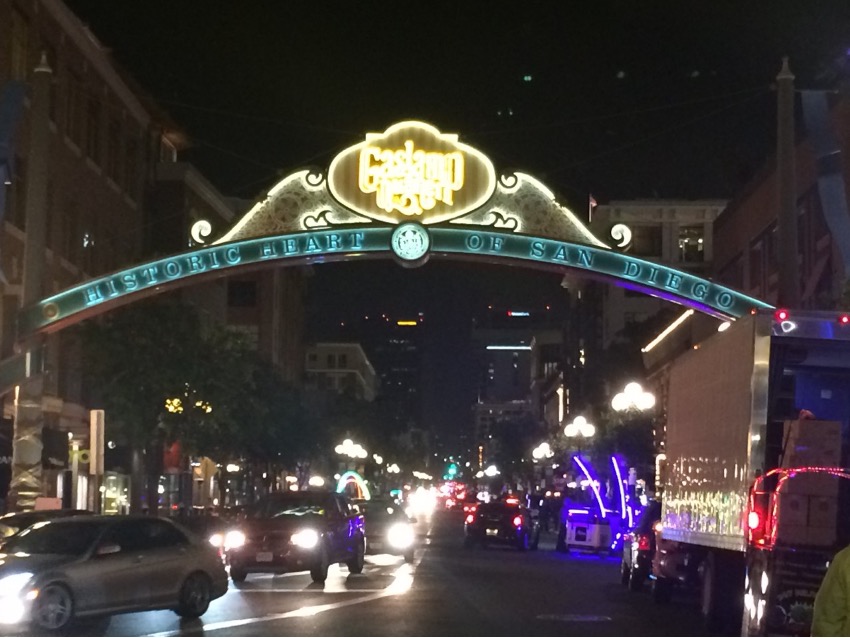
Downtown San Diego rises from the shores of the Pacific Ocean. The financial district has beautiful old buildings, but to feel the soul of San Diego, head to the Gaslamp Quarter, named after the gas lamps that were used in the city and can be seen near the illuminated portico entrance to this street. This historic neighborhood has numerous streets made up of Victorian buildings. All the street names imitate the streets of New York, but the main street is 5th Street, a street full of restaurants and pubs with a lot of movement, where every night is full of people going to the theater or students and visitors who come to this area. Near Gaslamp Quarter you will find the Los Padres baseball stadium. As a curiosity, this stadium opened its doors in 2004 and cost more than 450 million dollars, so don’t miss a game if you have the chance!
Within Downtown I recommend you to go to Little Italy, a very vibrant area with many restaurants, most of them Italian. Also, San Diego is the cradle of craft beer with more than 150 breweries, so you can try some of them when you are visiting this area of San Diego.
Navy pier and maritime museum
The area of San Diego Bay or the Navy is a very nice area of San Diego that is located a few meters from the Gaslamp Quarter. It is a strolling area by the sea where you can contemplate the port of San Diego, enjoy the recreational areas and visit some of its restaurants.
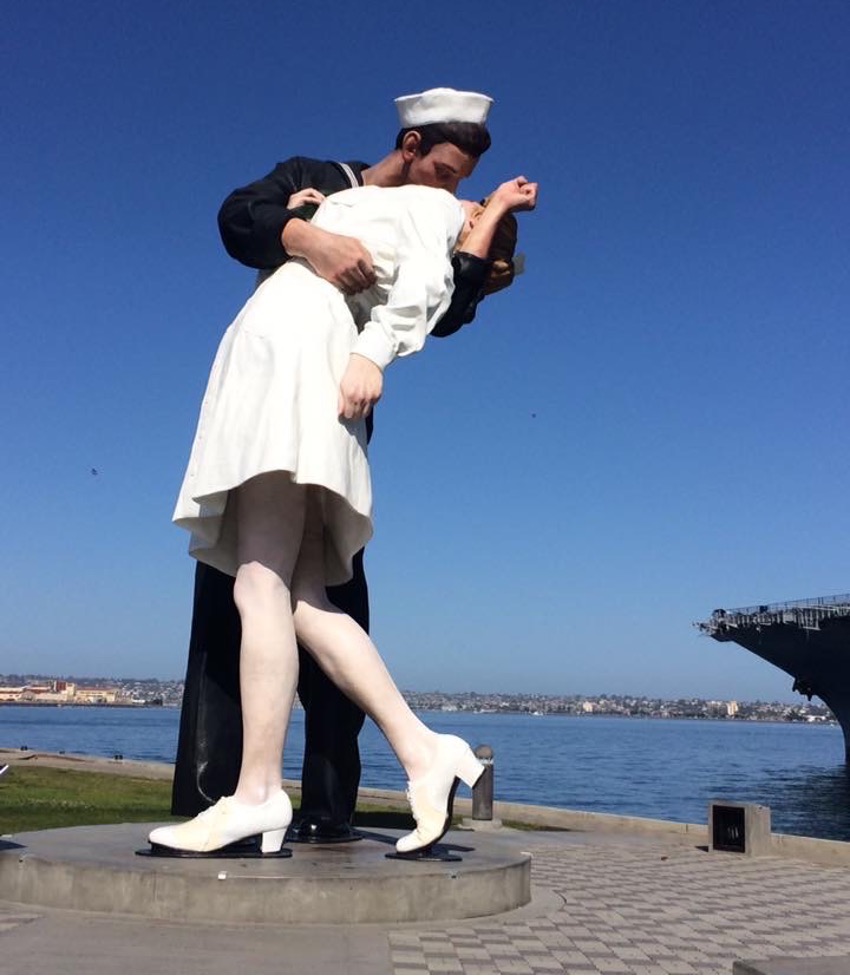
Right next to the Marina is the Midway area. As mentioned in the introduction, San Diego has the largest naval fleet in the world, with the aircraft carrier USS Midway converted into a museum. The USS Midway is the longest serving aircraft carrier of the 20th century, being occupied by more than 4,500 Marines at any one time. Next to the carrier is the most famous statue of San Diego («Save the Kiss») and represents the photograph that appeared in the New York Times on the day of the surrender of Japan on August 14, 1945 indicating the end of the war, where a sailor kisses a nurse who was found at random in the streets of New York. A few meters away you can also visit Star of India, a fishing boat considered the oldest active in the world and resembles a pirate ship. In addition, this area is characterized by the fish market or Fish Market held on Saturday mornings where you can buy fresh or cooked fish of high quality.
Coronado
A short distance from Navy pier and USS Midway, you can board a ferry and leave the hustle and bustle of Downtown behind. Coronado Island is within walking distance and is a very quiet area. Another option to get to Coronado is to cross the spectacular bridge that separates it from Downtown with more than 3.5 kilometers and a height of 61 meters to allow large ships to pass. The island of Coronado is half naval and the other half populated by citizens. In Coronado you can enjoy the wide beaches and the quiet atmosphere that surrounds this island.
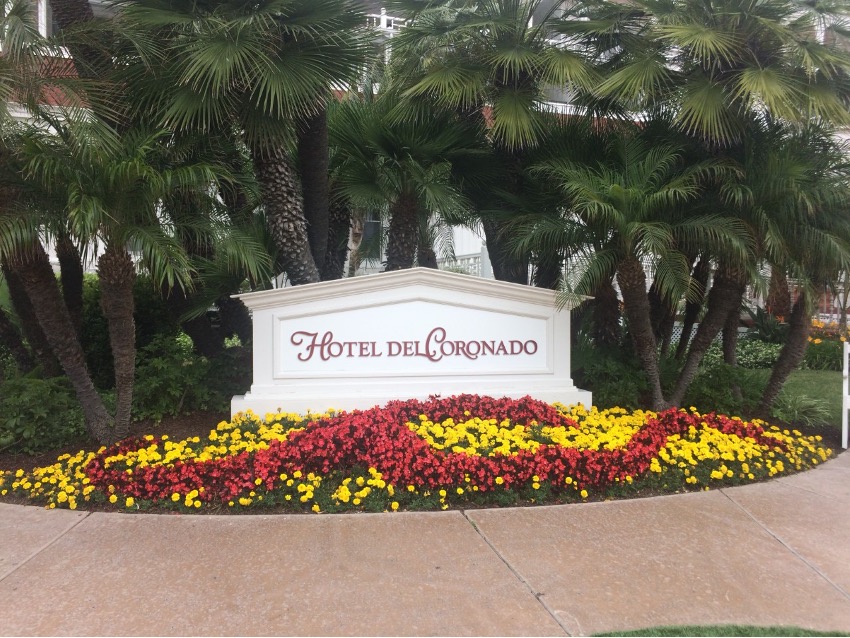
Within this island is the distinctive Hotel del Coronado, one of San Diego’s most iconic and beautiful Victorian-designed buildings. This hotel, which opened its doors in 1888, is considered one of the largest buildings made of wood, one of the first beach resorts in California and the first with electricity. All the presidents of the United States have stayed in this hotel and mythical movies such as «With Skirts and Madness» have been filmed there. Do not forget to go inside the hotel to see its spectacular chandelier, elevator and gift store to see vintage photographs.
Balboa Park and the San Diego Zoo
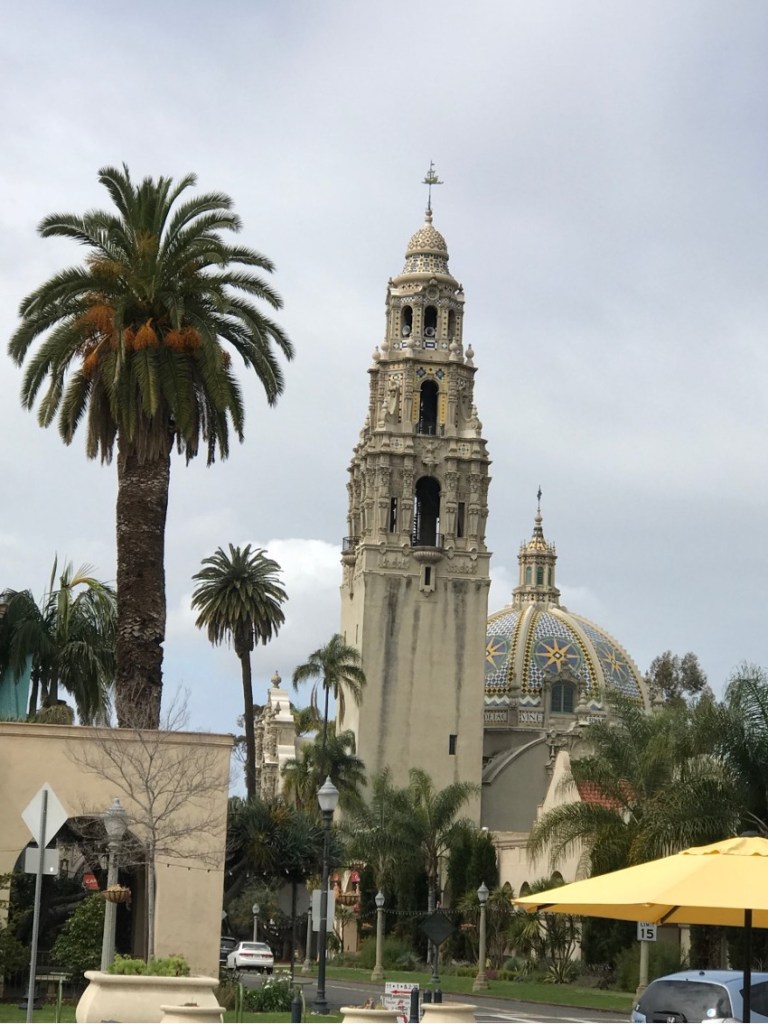
A few miles inland from Downtown is the largest urban park in the United States with more than 485 hectares, a place where nature, culture and impressive architecture come together. Balboa Park has more than a dozen museums with varied collections such as automobiles, aviation, art and natural history. One of the most interesting museums is the Air and Space Museum, very fun especially if you are traveling with children. Inside the park there are almost twenty different gardens to explore, including a reproduction of the gardens of the Alcazar of Seville.
Balboa Park is connected to the San Diego Zoo, one of the largest zoos in the world and one of the few places outside of China where you can see a real giant panda bear, a symbol of the city. This zoo also houses the largest population of koalas in the world outside Australia. To move inside the zoo you can use the different shuttles or internal buses and the cable car.
Point Loma
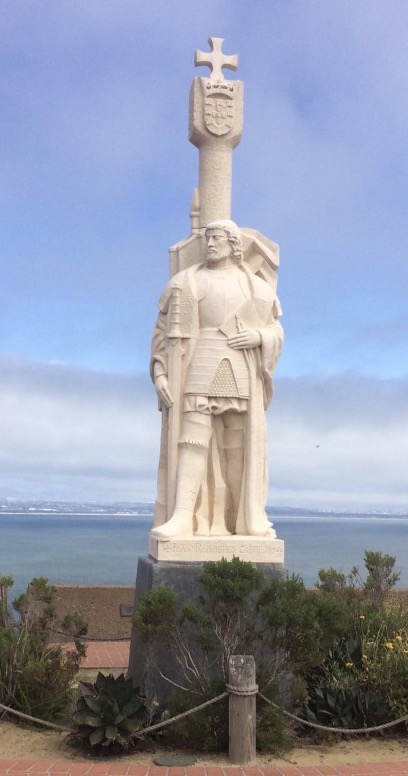
Across the harbor entrance is Point Loma, the first place where the explorer Juan Rodriguez Cabrillo set foot in 1542. Loma means hill and the views that can be seen from here are incredible, contemplating San Diego, its naval base and some of its fighter planes moving through the sky. If the weather is good, you can see as far as Mexico. Inside this viewpoint you can see the Cabrillo statue and the Point Loma lighthouse. Also, if you have time, very close by is the Fort Rosecrans National Cemetery, a federal military cemetery in the city of San Diego. Passing to this viewpoint costs 10 dollars per car, but if you travel by bus the entrance is free.
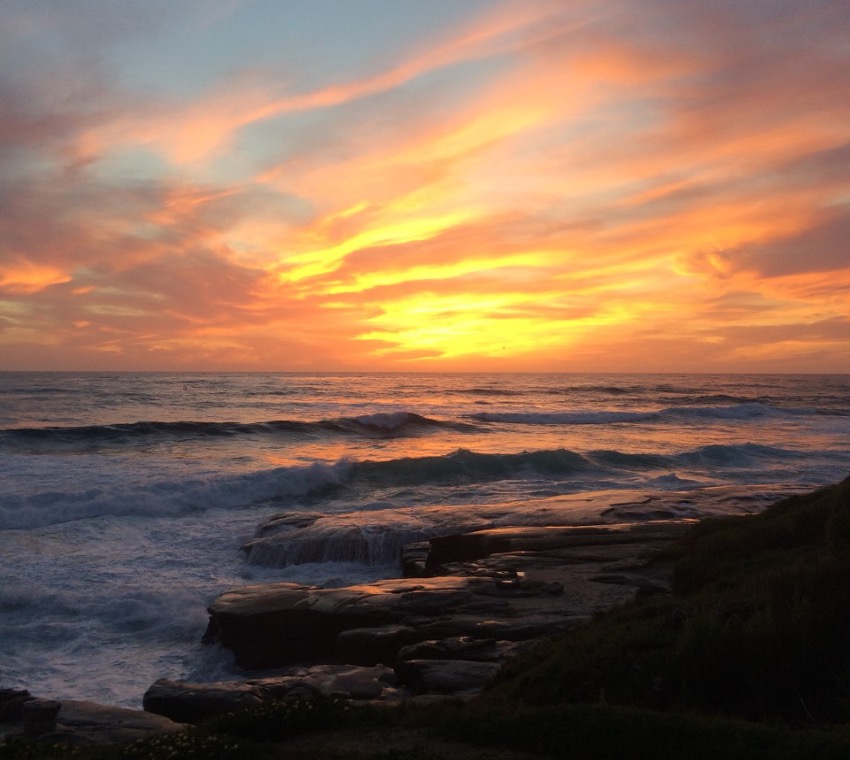
To the north, there are the spectacular neighborhoods of the Point Loma cliff called Sunset Cliffs, a very spectacular place to see the sunset, but with beaches of very difficult accessibility. Near this area is Ocean Beach, a beach area with a bohemian and hippy atmosphere. Finally, you can visit Shelter Island, an area with beautiful views of the harbor and Downtown San Diego. In general, the Point Loma area is where you can taste the best fish in town.
Mission Beach and Pacific Beach
San Diego’s beaches are one of the city’s main attractions. Each coastal location is unique, with a distinctive and distinct atmosphere. Mission Beach is a quiet, carefree beach area where you can enjoy the historic Belmont Park, a small amusement park with the Giant Dipper roller coaster that has been in operation for almost 100 years, making children and adults happy. Very close to Mission Beach is Mission Bay and Mission Recreational Park, the largest artificial bay in the United States with 1,600 hectares, where you can practice different water sports. On the other hand, the neighboring Pacific Beach has a very lively atmosphere, with a large number of restaurants and pubs, very frequented by young people. A good way to explore these coastal areas is to rent a bicycle and ride along the promenade.
La Jolla
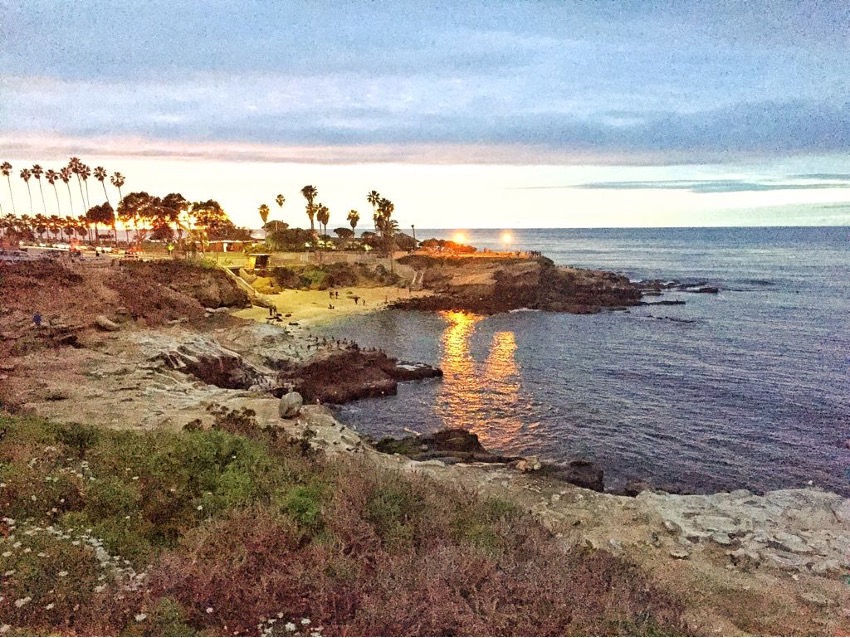
Following the coast is La Jolla, personally one of my favorite places in San Diego. This area is surrounded by the sea and has many small pristine beaches. La Jolla is the most exclusive area of San Diego, where you can see incredible mansions and the most luxurious cars in the world…… The real California dream!
La Jolla Village is the Dowtown of La Jolla and where you can walk through its picturesque streets and enjoy the wonderful views from some of its restaurants. You can also visit the Jolla Cove and spend a different kind of time watching the seals and sea lions. In addition, in the part of La Jolla Alta you can access a viewpoint called Mount Soledad where you can see beautiful views both in the tour and in the viewpoint of La Jolla Shores.
Within the La Jolla area is the University of California San Diego (UCSD) and the Scripps Institute, some of the world’s leading research centers. Within this area, you can also feel the passion that San Diegans have for the ocean, research and protection of the sea with a visit to the Birch Aquarium. For those who love hiking, in this area you can also visit Torrey Pines State Reserve, an area with lots of vegetation, cliffs and beautiful views, with the famous Torrey Pines Golf nearby.
Route from Del Mar to Oceanside
If you want to continue touring the Californian coast, don’t forget to take a drive along the entire coast following Highway 101 from Torrey Pines, visiting the coastal towns of Del Mar, Solana Beach, Encinitas, Carlsbard and Oceanside. On this tour you will enjoy the different coastal environments of California and its fantastic beaches.
Legoland and Seaworld
San Diego is also an exciting destination if you are traveling with children, as it has numerous tourist attractions. One of them is Legoland, where children between the ages of 2 and 12 can let their imagination run wild and enjoy more than 60 attractions. Another important tourist attraction is Seaworld, which has been active since 1964 educating and raising awareness about the love of marine animals to visitors from all over the world through its animals and shows.
San Diego is, in short, a destination to tour, savor and soak up its history, culture, different environments and breathtaking views. Enjoy this unique experience that will surely mark you and encourage you to return!
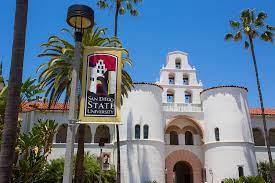
Universities in San Diego- San Diego State University
San Diego not only boasts wonderful weather and beaches, but it is also home to some of the most prestigious universities in the United States. The higher education opportunities available are as varied as the diverse culture that characterizes San Diego. Below is a list of the main characteristics that define each of the described centers of higher education, some requirements to get into the universities, scholarships and rankings. Let’s start analyzing the amount of academic opportunities in San Diego! What is the difference between «university», «college» and «community college»? In the United States, the terms college and university are sometimes used interchangeably to refer to higher education. However, there are differences between these two types of institutions. A college is an institution of higher education generally devoted almost exclusively to undergraduate or graduate study. Students, after completing a series of credits, receive their B.A. degree. (Bachelor of Arts) or a B.S. (Bachelor of Science). These degrees usually last 4 years. Sometimes each of the schools or faculties of a university is also referred to as a college. The term University encompasses a broader concept and includes the different colleges. It is defined as a higher educational institution where undergraduate studies (B.A. and B.S.), master’s degrees, doctoral programs, as well as professional studies are offered. Colleges can be public or private. On the other hand, a community college is considered a higher education institution where students obtain professional certificates or diplomas after obtaining a series of credits. Upon completion of their studies, students earn an Associate’s Degree (A.S.). These degrees usually last 2 years.
San Diego County has 14 universities and colleges, as well as 8 community colleges. Founded in 1897 as a training college for elementary school teachers, San Diego State University (SDSU) is the oldest and largest higher education institution in the surrounding area. It is the third largest university in the state of California.
Starting out with just seven faculty and 91 students meeting above a downtown drugstore, it is now a public research university that has around 7,700 faculty and staff and more than 35,000 students.
In its early days, the curriculum was limited to the study of English, history and mathematics. The modern SDSU now offers a vast range of subjects, comprising 91 undergraduate courses, 78 masters’ programmes and 22 doctoral degrees.
The university has a broad international outlook. Over 2,000 of its students annually take advantage of the 400 or so programs it offers in 67 countries worldwide. Additionally, SDSU welcomes more than 2,300 international students each year to its institution from a large variety of countries including China, Saudi Arabia and many European countries.
SDSU is a State Grant University and has been classified as a “research high” university by the Carnegie Foundation. It particularly prides itself on the programs it offers in business, engineering, public health and education, among others.
Since 2000 it has received more than $1 billion in grants and from other contracts, to be used for research and programme administration. It spends roughly $120 million a year on research.
Many of the university’s buildings are listed on the national register of historic places, including the central Hepner Hall, which can also be found on the university’s emblem and seal.
The university is also home to the Malcolm A. Love library, which comprises more than two million books, around 140,000 e-books, a modern media centre and 24/7 study rooms. It also acts as both a state and federal depository library.
SDSU has an alumni network more than 280,000 strong. Some notable people that went to the university include American actors Gregory Peck and Raquel Welch, and the CEO of Costco, Jim Sinegal.
Annual conference of the Marie Curie alumni Association (MCAA)
Díaz, E. (2019). Digital revolution on consumer experience and business competitiveness. General Assembly and Annual Conference of the Marie Curie Alumni Association (MCAA). Vienna (Austria):Marie Curie Alumni Association.
XXXI International Conference of Marketing
Fernández-Ferrín, P., Bande, B., Galán-Ladero, M.M., Martín-Consuegra, D., Díaz, E., & Castro, S. (2019). Actitudes de los consumidores hacia la proximidad, la tradición y la etnicidad de los productos alimenticios con indicación geográfica (English translation: Consumer attitudes towards proximity, tradition and ethnicity of GI food products). In Proceedings ofXXXI International Conference of Marketing. Cáceres: University of Extremadura.
2019 Summer American Marketing Association Conference
Díaz, E., Carranza, R., Martín-Consuegra, D., & Esteban, A. (2019). The impact of smart technologies on organizations. In Proceedings 2019 Summer American Marketing Association Conference. Chicago (United States): American Marketing Association.
XXVIII International Conference of the Academy
Díaz, E. Esteban, A., & Carranza, R. (2019). Smart tourism: Effects on business competitiveness. In Proceedings XXVIII International Conference of the Academy. Tokyo (Japan): European Academy of Management and Business Economies.
2019 Society for Marketing advances
Díaz, E., Carranza, R., Esteban, A., & Martín-Consuegra, D. (2019). Digital tools and smart technology in marketing: A thematic evolution. In Proceedings 2019 Society for Marketing Advances. New Orleans (United States): Society for Marketing Advances.
5th World Research Summit for Hospitality and Tourism 2019
Díaz, E., Esteban, A., Carranza, R., & Martín-Consuegra, D. (2019). Evolution of information and communication technologies in tourism and hospitality literature. In Proceedings 5th World Research Summit for Hospitality and Tourism 2019. Orlando (United States): UCF Rosen College of Hospitality Management.
ENTER conference 2020
Díaz, E., Esteban, A., & Andreu, L. (2020). Smartourism: Effects on conumer experience and business competitiveness. In e-Review of Tourism Research, ENTER Conference, Vol. XX, No. XX. Surrey (United Kingdom): International Federation for IT and Travel & Tourism (IFITT).
47th Annual Meeting Federation of Business Disciplines
Díaz, E., Esteban, A., Carranza, R. & Martín-Consuegra, D. (2020). Investigating the effects of smart technologies on consumers and organizations. 47th Annual Meeting Federation of Business Disciplines. San Antonio, TX. (United States): Association of Collegiate Marketing Educators (ACME).
2020 Society for Marketing Advances
Díaz, E., Carranza, R., Esteban, A., & Martín-Consuegra, D. (2020). How smart technologies have affected the tourism-related services. En Proceedings 2020 Society for Marketing Advances. Estados Unidos: Society for Marketing Advances.
2020 III CETT Smart Tourism Congress
Díaz, E., Carranza, R., Esteban, A., & Martín-Consuegra, D. (2020). Combination of smart technologies and its impact on enterprises. En 2020 III CETT Smart Tourism Congress Barcelona. Barcelona (España): CETT.
2020 AMS Virtual Conference
Díaz, E., Carranza, R., Esteban, A., & Martín-Consuegra, D. (2020). Research streams on digital and smart technology in marketing literature. En 2020 AMS virtual conference. Estados Unidos: Academy of Marketing Science.
General Assembly and Annual Conference of the Marie Curie Alumni Association (MCAA)
Díaz, E. (2021). The effect of smart technologies on consumer experience and business competitiveness. General Assembly and Annual Conference of the Marie Curie Alumni Association (MCAA). Marie Curie Alumni Association.
GLOSERV: Global Conference on Services and Retail Management
Díaz, E., Esteban, A., Carranza, R., Sánchez-Camacho, C. & Martín-Consuegra, D. (2021). The impact of smart technologies on value and service performance in tourism service providers. En GLOSERV: Global Conference on Services and Retail Management. May 10-13, 2021. University of South Florida (Estados Unidos) and Universita Degli studi di Napoli Federico II (Italy).
4th International Scientific Conference «TOURMAN 2021»
Díaz, E., Esteban, A., Carranza, R., Sánchez-Camacho, C. & Martín-Consuegra, D. (2021). Technology in the hospitality and tourism literature. Looking back and looking forward. En 4th International Scientific Conference «TOURMAN 2021». May 21-23, 2021, Thessaloniki, Greece.
Participation in the blog called «Todo sobre USA» to provide information about San Diego (United States) and thus help future researchers to settle in and get to know the city (https://www.todosobreusa.com).